
Order of the Mass in Spanish: The Parts and Their Names
The order of the Mass in Spanish, part by part, with the Spanish name of each part, who leads it and what changes every week, for parish planners.
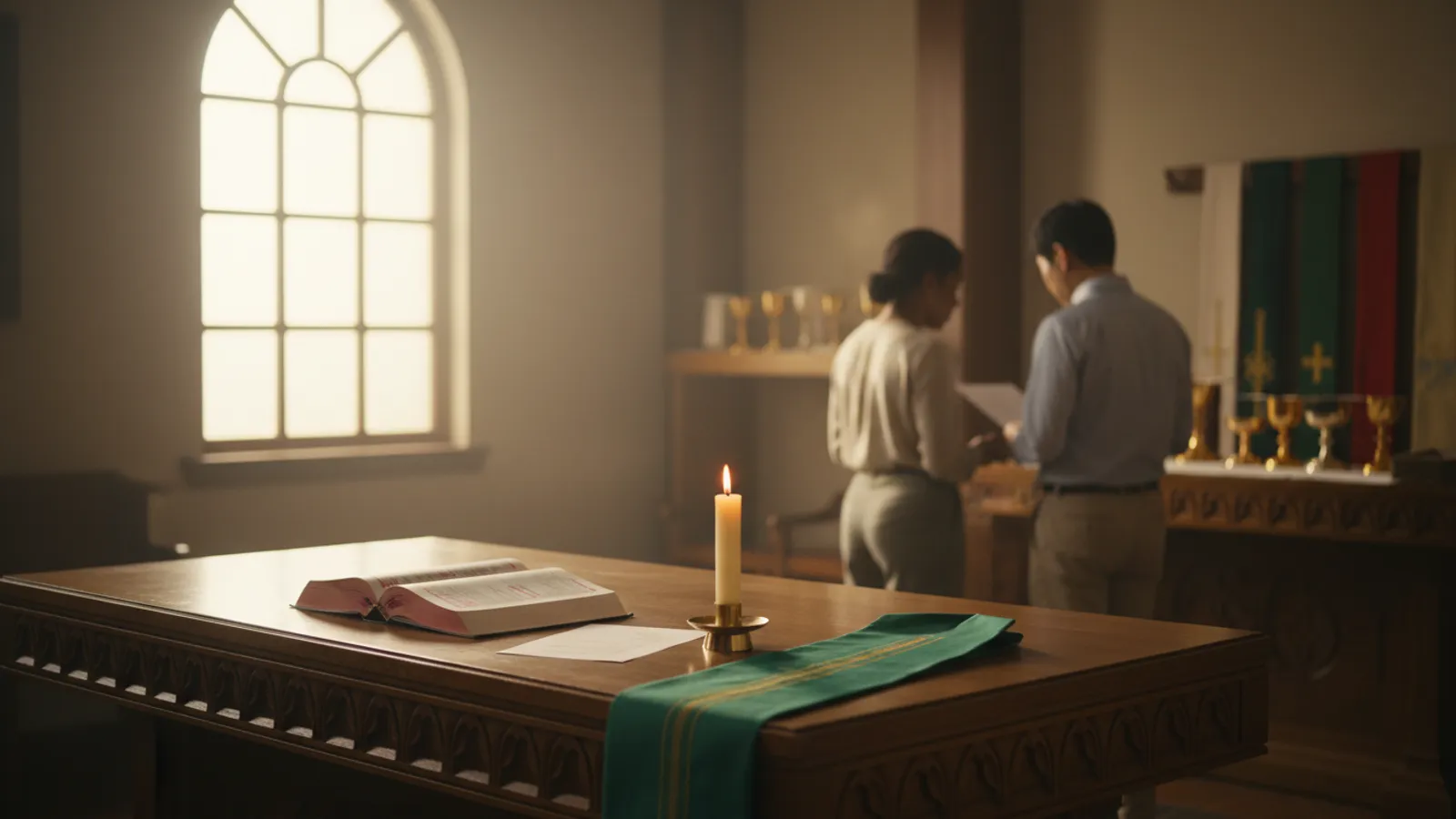
A parish that starts a Spanish Mass, or takes over one that a visiting priest used to celebrate, runs into the same small problem every week. The Mass is the same Mass. But the schedule, the worship aid, the roster of lectors and the notes for the musicians all need names for the parts, and the people who serve at the Spanish Mass call them by their Spanish names.
This guide lists the order of the Mass in Spanish, part by part, with the Spanish name of each part, who usually leads it, and which parts change every Sunday. It is written for liturgy coordinators, parish secretaries, music directors and priests who plan a Spanish or bilingual Mass. For the people's answers themselves, see our pew guide to the Mass responses in Spanish.
The four parts at a glance
The Mass has the same four sections in every language:
| English | Spanish |
|---|---|
| Introductory Rites | Ritos iniciales |
| Liturgy of the Word | Liturgia de la Palabra |
| Liturgy of the Eucharist | Liturgia eucarística |
| Concluding Rites | Ritos de conclusión |
Anyone who knows the English Mass already knows the order of the Spanish one. What differs is the vocabulary on the planning sheet, and a few customs that many Hispanic communities bring with them.
Ritos iniciales (Introductory Rites)
- Canto de entrada (Entrance Chant): led by the choir or coro. On feast days it may be a full band or a mariachi.
- Saludo (Greeting): the priest.
- Acto penitencial (Penitential Act), with the Señor, ten piedad (Lord, have mercy).
- Gloria: sung on Sundays, except in Advent and Lent. Advent begins on 29 November this year, so the Gloria drops out of the Sunday Mass until Christmas, when it comes back with full force.
- Oración colecta (Collect): the priest.
Some Spanish-speaking communities also have a monitor or comentarista, a lay minister who welcomes people before the entrance chant and introduces the readings in a sentence or two. If your parish has one, put them on the roster like a lector.
Liturgia de la Palabra (Liturgy of the Word)
- Primera lectura (First Reading): a lector.
- Salmo responsorial (Responsorial Psalm): a cantor, often called the salmista.
- Segunda lectura (Second Reading): a second lector, on Sundays and solemnities.
- Aclamación antes del Evangelio (Gospel Acclamation): usually the Aleluya, replaced in Lent by another acclamation.
- Evangelio (Gospel): the deacon or priest.
- Homilía (Homily): the priest or deacon.
- Profesión de fe (Profession of Faith), the Credo: on Sundays and solemnities.
- Oración universal or oración de los fieles (Universal Prayer, Prayer of the Faithful): a lector or the deacon reads the intentions.
Everything in this section changes every week except its shape: new readings, a new psalm response, a new homily and new intentions. It is also the part where a newcomer who does not speak Spanish loses the thread.
Liturgia eucarística (Liturgy of the Eucharist)
- Preparación de los dones (Preparation of the Gifts): the collection and the procession with the gifts, often a family or a parish group.
- Oración sobre las ofrendas (Prayer over the Offerings): the priest.
- Plegaria eucarística (Eucharistic Prayer), which includes:
- the Prefacio (Preface) and its opening dialogue,
- the Santo (Holy, Holy),
- the Consagración (Consecration),
- the Aclamación memorial (Memorial Acclamation), after the priest's invitation,
- the Doxología final and the Gran Amén.
Rito de la comunión (Communion Rite)
- Padre nuestro (Lord's Prayer), followed by the embolism and doxology.
- Rito de la paz (Sign of Peace).
- Fracción del pan (Breaking of the Bread), with the Cordero de Dios (Lamb of God).
- Comunión (Communion): the priest with ministros extraordinarios de la Comunión. Ushers are usually ujieres or acomodadores.
- Oración después de la comunión (Prayer after Communion).
Ritos de conclusión (Concluding Rites)
- Avisos (Announcements): when your parish gives them before the final blessing.
- Bendición (Blessing).
- Despedida (Dismissal).
The avisos deserve a line of their own on the plan. At a Spanish Mass they cover the quinceañera classes, the Guadalupe celebration on 12 December, the Posadas and the parish festival, and they are the part an English-speaking spouse or a teenager raised in English most needs to understand.
Where two parts come from
Two of the parts above are Scripture set to music. The Gloria opens with the song of the angels at Christmas, in Luke 2:14. Here is the verse in two of the Bibles Heartongue ships:
English (World English Bible, Catholic edition): "Glory to God in the highest, on earth peace, good will toward men."
Spanish (Santa Biblia libre para el mundo): "Gloria a Dios en las alturas, en la tierra la paz, la buena voluntad hacia los hombres."
The Santo echoes the seraphim in Isaiah 6:3. In the same Spanish Bible it reads: "¡Santo, santo, santo es Yahvé de los Ejércitos! ¡Toda la tierra está llena de su gloria!"
A homily in Advent or at Christmas will often come back to one of these verses. That is the moment a translation either sounds like the Bible people know or sounds invented.
Planning for a bilingual congregation
Knowing the order solves the planning, not the language. At most Spanish Masses some people follow less than they would like: a spouse who grew up in English, grandchildren who answer in English. At an English Mass, it is the other way around.
A printed worship aid helps with the fixed parts. It cannot help with the readings and the homily, which change every week, or with the avisos, which are never printed in time.
Heartongue is built for that gap. A laptop at the sound desk takes the audio from your mixer; listeners scan a QR code, choose their language, and follow the readings, the homily and the announcements on their own phone, with captions and a natural voice, about two seconds after each sentence ends. No receivers to hand out and no app to install, and one broadcast serves several languages at once, out of 49.
It translates the way a Catholic parish speaks, which is where general translation apps stumble:
- Verses from a real Bible. When the priest quotes Luke 2:14 in the homily, the English listener reads it from an English Bible and the Spanish listener from a Spanish one, marked 📖 with the reference, as in the example above.
- Prayers as people pray them. When the congregation prays the Our Father, the Hail Mary, the Creed or the Glory Be, each listener reads the wording Catholics pray in their own language, not a fresh word-for-word guess.
- Catholic words. La Eucaristía, not la Santa Cena; la Misa, not el culto. More than 1,000 church terms in every language, plus a glossary your team can edit, even during Mass.
- Natural sentences. A homily stays a homily, and an announcement about the Posadas sounds like an announcement.
It is machine interpretation, so it can still get a name or a sentence lost in poor audio wrong. For following the homily every Sunday, it is often the most practical choice a parish has. Our guide to the Catholic Mass in Spanish with English translation walks through the setup.
A one-page plan for the Spanish Mass
- List the parts in Spanish and English in two columns, as above, so that every minister and musician reads the same names.
- Put a name next to each part that needs one: monitor, lectors, salmista, the person who reads the intentions, the gift bearers, ministers of Communion, ujieres.
- Mark what is left out by season: no Gloria in Advent and Lent, no Aleluya in Lent.
- Add the avisos as a part of their own, with the person who gives them.
- Print the QR code for live interpretation on the worship aid, so the homily and the avisos reach everyone in the pews.
What it costs
Every parish starts with 2 free language-hours, enough to try live interpretation at one or two Spanish Masses. After that it is $4 per language-hour, or a plan: Chapel at $49 a month with 15 hours, Parish at $149 a month for every regular Mass in every language, or Ministry at $249 a month with unlimited rooms and transcripts. The details are on the pricing page.
The same Mass, every name in place
Ritos iniciales, Liturgia de la Palabra, Liturgia eucarística, Ritos de conclusión. Once the planning sheet uses the same names as the people who serve, the Spanish Mass runs like every other Mass in the parish. Live interpretation then makes sure the parts that change every week reach everyone in the pews.
See how Heartongue handles Spanish translation for church, or read our guide to the bilingual Mass.
More from the blog
Catholic Mass in Tagalog With English Translation
Heartongue8 min read
How a parish can hold a Tagalog Mass that the whole family follows: the homily on each phone in English or Filipino, prayers as Filipinos pray them.
Catholic Mass in Polish With English Translation
Heartongue8 min read
The Mass responses in Polish and English side by side, and how a parish can let families follow a Polish Mass homily in English, or an English one in Polish.
Simbang Gabi in English: Planning a Bilingual Novena
Heartongue8 min read
How a parish can hold Simbang Gabi for Filipino families and everyone else: English or Tagalog, the homily on each phone, prayers as Filipinos pray them.
Try it at your next service
2 language-hours free, no card needed. Set up a room in five minutes.
 Product Hunt
 Indie Hackers
 Fazier
 StartupBase
 SaaSHub