
Catholic Mass in Spanish With English Translation
How a parish can offer English translation at its Spanish Mass, or Spanish at its English Mass, so mixed families can pray together.
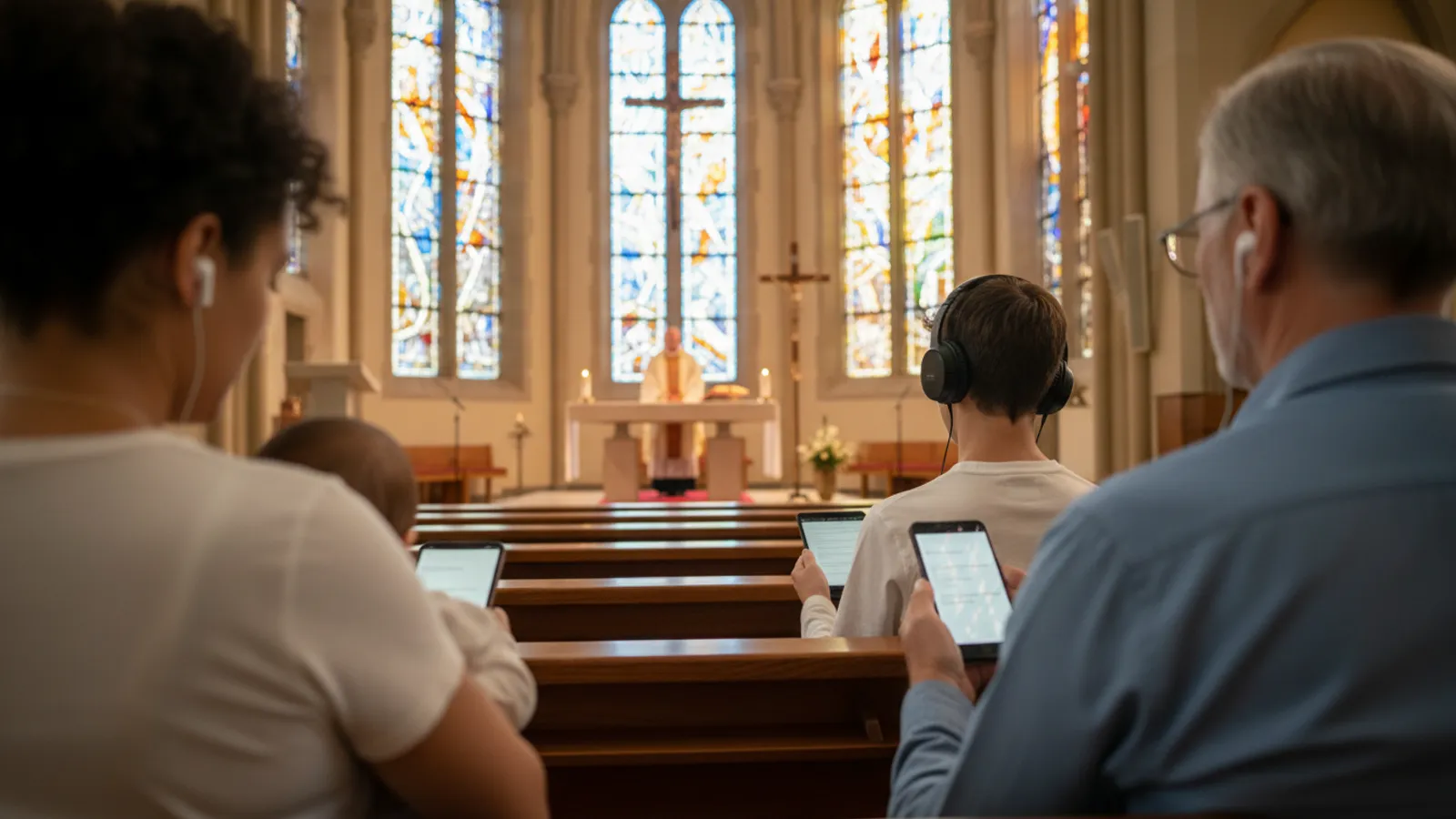
In many parishes the Spanish Mass is the fullest Mass of the weekend. And in many of those pews sits someone who does not follow all of it: a husband who grew up speaking English, teenagers who understand Spanish at home but not a homily, a godparent visiting from another parish, a new deacon still learning the language.
The usual answers are a missal in both languages, a printed homily summary, or simply hoping they catch enough. This guide looks at the other options a parish has for a Catholic Mass in Spanish with English translation, what each one asks of your staff and volunteers, and what changes when the translation is done live on people's phones.
Everything below works in the other direction too: English Mass, Spanish translation.
What people actually need to follow
It helps to separate the parts of the Mass, because they need different things.
The parts people already know. The Gloria, the Creed, the Our Father, the Lamb of God. Most bilingual Catholics can follow these in either language, and a participation aid or missalette covers the rest.
The readings. These change every Sunday. A bilingual missalette helps if your parish uses one, but many visitors and younger parishioners will not pick it up.
The homily and the announcements. This is where people get lost. The homily is never printed in advance, and it is the part that speaks to the week the family is living. Announcements about the parish festival, first Communion classes or a funeral are exactly what a mixed family needs to hear, and they are often said in only one language.
So the real question is usually: how do we let someone follow the homily and the announcements, live, in the language they understand best?
Option 1: A bilingual Mass
Some parishes celebrate one bilingual Mass: readings in one language, the Gospel in both, the homily given twice or split between languages. It brings the community together, and for feast days it can be beautiful.
The cost is time and attention. A homily given twice is a longer Mass, and each half of the congregation waits through the part it does not understand. It also depends on a priest or deacon who preaches comfortably in both languages, every week.
Option 2: A human interpreter
A bilingual parishioner interprets the homily into a microphone, and listeners hear it through receivers and headsets, or sit together near the interpreter.
When you have a skilled interpreter who can commit to every Sunday, this can work very well. The hard part is the commitment. Interpreting a homily live is demanding, the interpreter misses the Mass they are serving at, and when they are sick or away, the translation stops. Receivers also need someone to hand them out, collect them and keep them charged.
Option 3: Live interpretation on listeners' phones
A newer option is AI interpretation that listeners follow on their own phones. A laptop at the sound desk takes the audio from your mixer. Listeners scan a QR code at the entrance or in the bulletin, choose English, and hear the homily in a natural voice with captions, about two seconds after each sentence is finished. No app to install, no receivers to buy.
This is what Heartongue does. One broadcast can serve several languages at once, so the same Spanish Mass can be followed in English by one family and in Portuguese or Vietnamese by another, from 49 languages. If the priest switches between Spanish and English in the same homily, Heartongue detects the language of every sentence and keeps going.
It is still machine interpretation, and it is not perfect. It can stumble over a name or a sentence lost in poor audio. For a confession, a marriage preparation meeting or pastoral care, a person who speaks the language is the right answer. For following a homily and the announcements every Sunday, live interpretation on phones is often the most practical option a parish has.
Why generic translation apps fall short at Mass
If you have tried pointing a general translation app at the ambo, you have probably seen the problem. These tools translate word for word, invent their own Bible wording, mix Catholic and Protestant vocabulary, and cut sentences in the middle of a thought. A homily translated that way is hard to follow and sometimes jarring.
Heartongue was built for exactly this. In a Catholic parish, it translates the way Catholics speak.
Prayers as your parishioners pray them. When the congregation says the Hail Mary in English, a Spanish listener does not read a fresh word-for-word translation. They read the prayer they learned as children:
English (said aloud): "Hail Mary, full of grace, the Lord is with thee."
Spanish (on the listener's phone): "Dios te salve, María, llena eres de gracia, el Señor es contigo."
The same goes for the Our Father, the Apostles' and Nicene Creeds and the Glory Be.
Bible verses from a Bible, not a guess. When the homilist quotes a verse, listeners read it from a Bible in their own language and tradition, marked 📖 with the reference. For Catholic parishes that means a Catholic edition. Take Luke 1:28, the angel's greeting to Mary:
English (World English Bible, Catholic edition): "Rejoice, you highly favored one! The Lord is with you. Blessed are you among women!"
Spanish (Santa Biblia libre para el mundo): "¡Alégrate, muy favorecida! El Señor está contigo. Bendita eres entre las mujeres."
One honest limit: the readings at Mass come from the Lectionary, and the translations used in Lectionaries are licensed editions that Heartongue does not include. When a verse is quoted, listeners see the wording of a free Bible in their language, which can differ slightly from the Lectionary they hear in church. Heartongue ships 37 free, public-domain or openly licensed Bibles.
Catholic words, not Protestant ones. Spanish has different words depending on the tradition, and a parishioner notices immediately when the wrong one appears. In a Catholic parish, Heartongue says la Eucaristía, not la Santa Cena; san Pablo, not el apóstol Pablo; the priest is nuestro padre, not nuestro pastor. It knows more than 1,000 church terms in every language, and your team can add your own names and words to a glossary, even during Mass.
Natural, not robotic. Sentences are kept whole, idioms are translated by their meaning, and the announcements about the parish picnic sound like everyday speech, not Scripture.
How to set it up for a Sunday
- Get clean audio. Take a line out of your mixer into a laptop at the sound desk. A line feed works far better than a microphone picking up the room.
- Create a room for the Mass. Each room has a permanent QR code and join code, so you can print it once.
- Tell people where it is. Put the QR code in the bulletin, on a card at the entrance, and say it once before Mass: "If you would like to follow in English, scan the code on the card."
- Show it in the hall if you want. A presenter screen can display the captions for a parish hall or a side room.
- Ask for honest feedback. After the first two Sundays, ask two or three bilingual parishioners what worked and what did not, and add the names and terms that came out wrong to the glossary.
Your parishioners need earphones to listen with the voice, or they can simply read the captions.
What it costs
Heartongue counts language-hours: one hour of broadcasting translated into one language that someone is actually listening to. A one-hour Spanish Mass followed in English uses one language-hour. Languages nobody listens to are not charged.
Every parish starts with 2 free language-hours, enough to try it at a real Mass. After that it is $4 per language-hour, or monthly plans from $49 for 15 language-hours. The details are on the pricing page.
Start with one Mass
You do not need to change your whole weekend schedule. Pick the Spanish Mass where you know a few English speakers sit, try live interpretation there for two Sundays, and listen to what those families tell you.
See how Heartongue handles Spanish translation for church, how it works as a church translation system without receivers, or read our guide on adding Spanish translation to an English service.
More from the blog
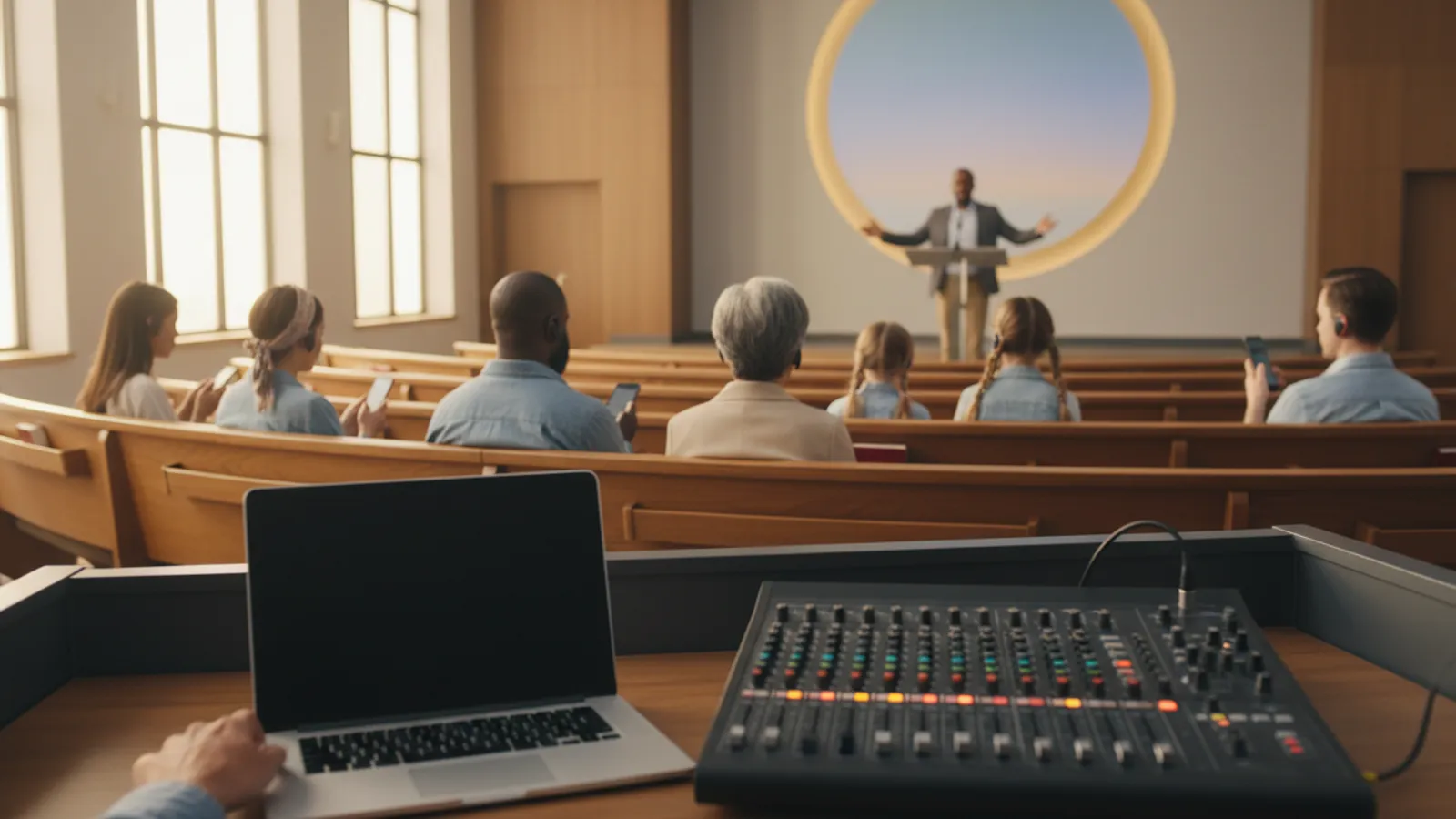
How to Choose the Best Church Translation System
Heartongue7 min read
There is no single best church translation system, only the best fit for your people. Seven questions to compare interpreters, receivers and phone-based AI.
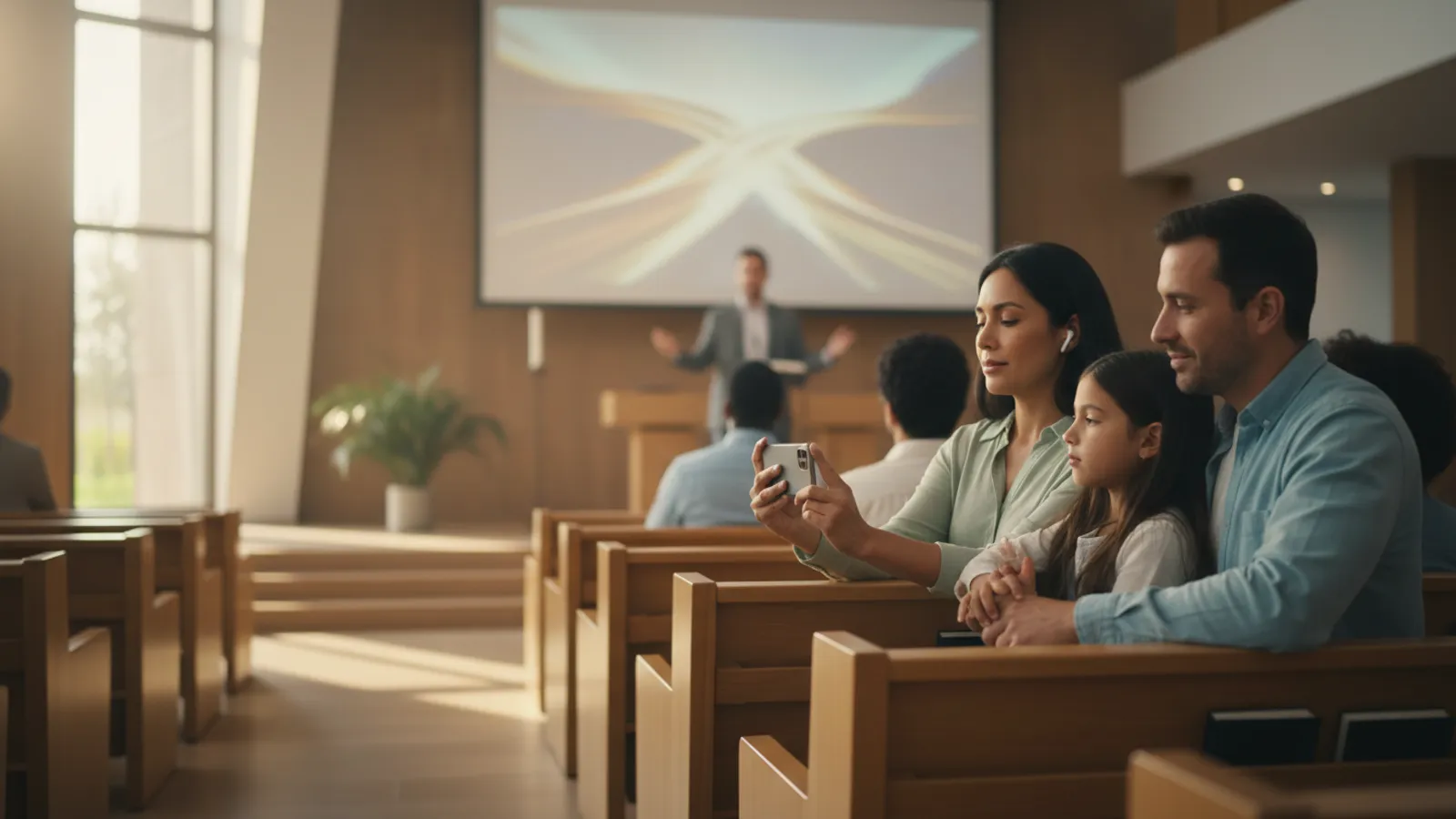
How to Add Spanish Translation to an English Service
Heartongue8 min read
Four practical ways to add Spanish translation to an English church service, what each takes on a Sunday, and a step-by-step plan to start next week.
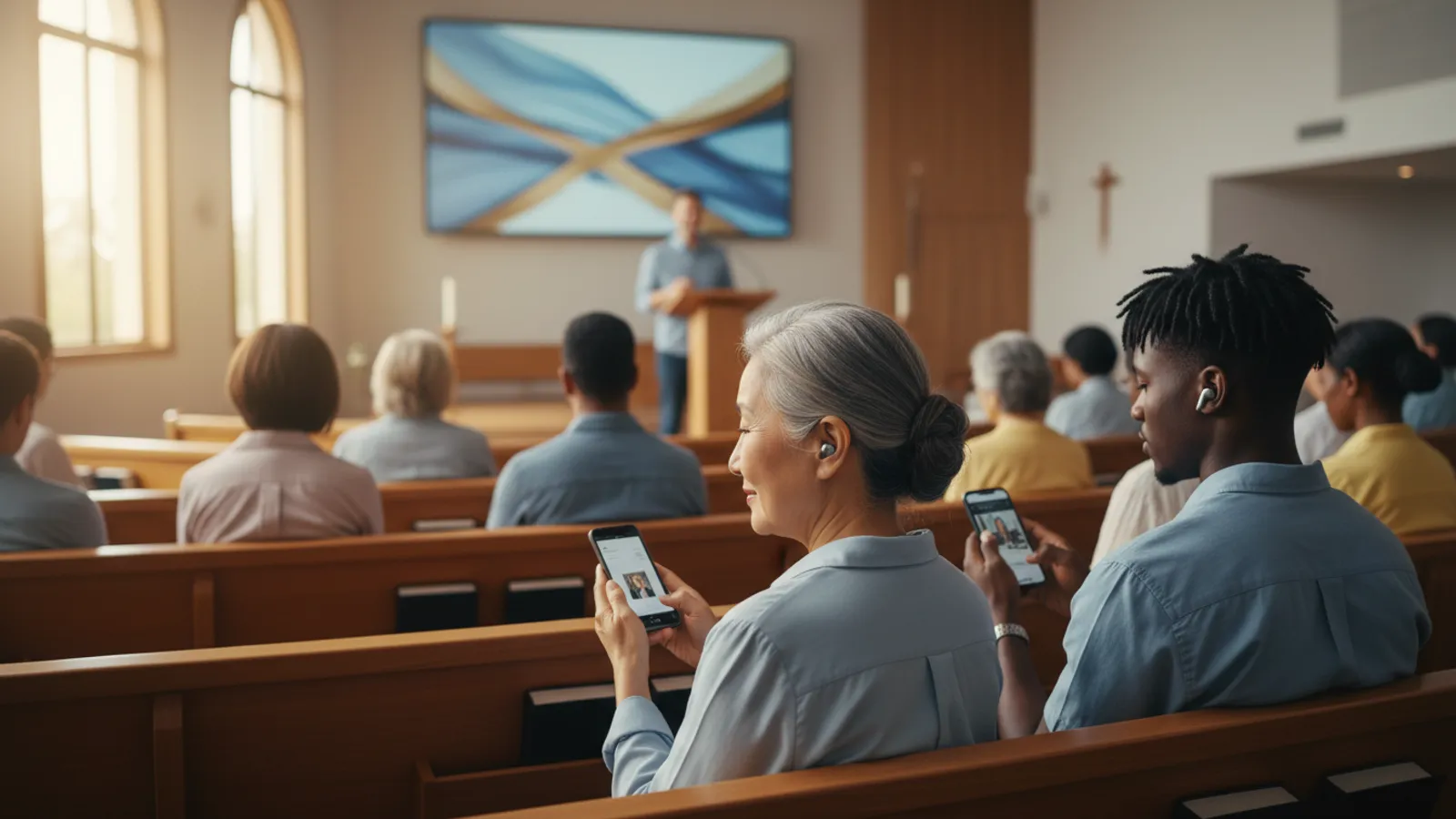
Church Translation Equipment vs. Phones: What a Small Church Needs
Heartongue4 min read
Transmitters, receivers and headsets, or the phones people already carry? How church translation equipment works, what it takes to run, and when each makes sense.
Try it at your next service
2 language-hours free, no card needed. Set up a room in five minutes.