
Simbang Gabi in English: Planning a Bilingual Novena
How a parish can hold Simbang Gabi for Filipino families and everyone else: English or Tagalog, the homily on each phone, prayers as Filipinos pray them.
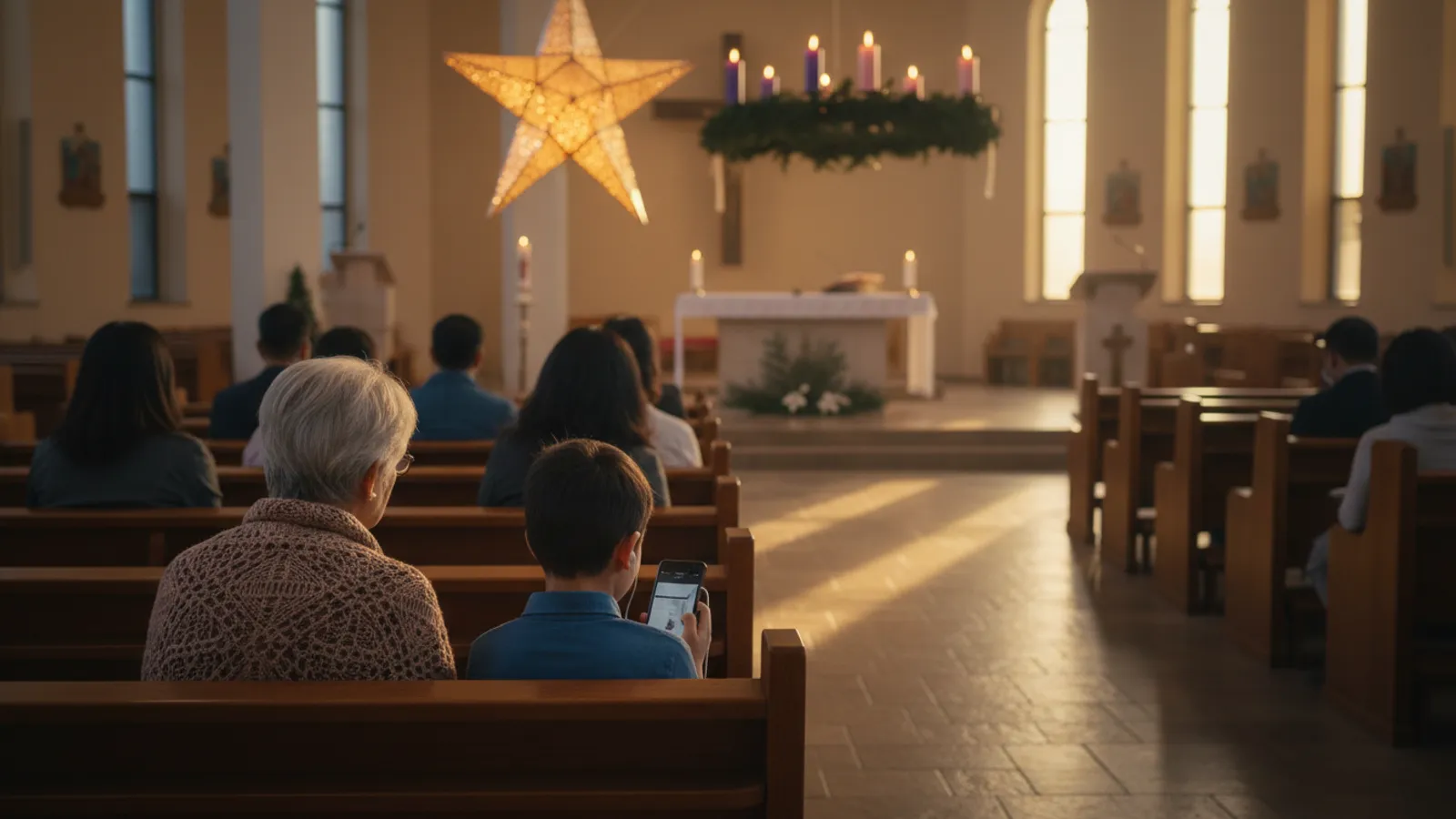
For Filipino Catholics, Christmas starts nine days early. Simbang Gabi, the nine Masses before Christmas, is the tradition many families keep wherever they live: in the Philippines before dawn, in many other countries in the evening after work. Grandparents who pray the rosary in Tagalog come with grandchildren who think in English.
That makes Simbang Gabi one of the most multilingual weeks of the parish year, and it raises the same question in every planning meeting: in English, in Tagalog, or both?
This guide is for the pastors, Filipino ministry leaders, liturgy coordinators and parish office staff who plan the novena in November, so that the language question is answered before December 16.
What Simbang Gabi is
Simbang Gabi means "night Mass", and it is also called Misa de Gallo. The nine Masses run from December 16 to December 24; parishes that hold them in the evening often begin a day earlier, on December 15. Many families try to attend all nine nights. After Mass there is usually food (bibingka and puto bumbong are the classics) and the church is often decorated with parols, the star-shaped lanterns of a Filipino Christmas.
In many dioceses outside the Philippines, Simbang Gabi rotates, with a different parish hosting each night. So even a parish with few Filipino families may host one evening.
The Masses themselves follow the late Advent liturgy. From December 17, the weekday Gospels (when no Sunday falls in between) walk through the stories that lead to Christmas in Matthew and Luke: the genealogy of Jesus, Joseph's dream, the announcement to Zechariah, the Annunciation, the Visitation, the Magnificat.
Three language situations, three answers
A Mass in English with Filipino music. This is the most common pattern in English-speaking countries. The Mass is in English, the choir sings Filipino Christmas songs, and the readings may include one in Tagalog. It works well for second-generation families. It works less well for grandparents and relatives visiting from the Philippines, who know the songs and the prayers but lose the homily.
A Mass in Tagalog. A Filipino priest celebrates in Tagalog, often with Tagalog readings and responses. It is the Simbang Gabi the elders remember. But now the non-Filipino spouse, the children raised in English and the parishioners who came because their parish is hosting cannot follow the homily. This is usually who searches for "Simbang Gabi in English".
A Mass that moves between both. Readings alternate and the homily switches language halfway. Everyone understands half, or the priest says everything twice.
None of these is wrong. Choose one on purpose, and give the people who do not speak the Mass language a way to follow the parts that change every night.
What people can follow on their own
The order of the Mass is the same in every language. A Filipino grandmother at an English Mass and an American husband at a Tagalog Mass both know when to stand, when to sit and when to answer. A printed worship aid with the responses side by side, in English and Tagalog, covers most of the fixed parts.
What a worship aid cannot cover:
- The homily, different every night and, during a novena, often the part that ties the nine evenings together.
- The readings, which change daily in late Advent.
- The announcements: tonight's food, tomorrow's host parish, where to park, the Christmas schedule.
Those are the parts where live interpretation helps.
Live interpretation for Simbang Gabi
With Heartongue, a laptop at the sound desk takes the audio from your mixer. Listeners scan a QR code at the door, choose their language, and follow the Mass on their own phone with captions and a natural voice, about two seconds after each sentence. At an English Mass, the grandparents choose Filipino; at a Tagalog Mass, the spouse and the children choose English. Nobody installs an app or creates an account.
A few things matter for Simbang Gabi in particular:
- Two languages at the ambo. When the priest moves from English to Tagalog and back, each sentence's language is detected, so the English listener still hears English and the Filipino listener still hears Filipino.
- Several languages at once. If Spanish-speaking or Vietnamese families come because their parish is hosting, they can follow too. One broadcast can serve several of the 49 languages Heartongue supports.
- The same room every night. Set up the room once and print one QR code on the worship aid for all nine evenings. If Simbang Gabi rotates between parishes, the code can travel with the ministry.
- The presenter screen. A screen in the hall can show the captions too, which helps families who arrive without a phone or with a dead battery.
It is machine interpretation, so it can still stumble over a name or a sentence lost in a noisy hall. For the homily, the readings and the announcements of nine busy evenings, it is often the most practical way to let everyone follow.
Why the wording matters at Simbang Gabi
Filipino Catholics know their prayers by heart, and a translation that invents its own wording is noticed at once. Heartongue is built to translate the way a parish speaks:
Verses from a real Bible. When the priest reads or quotes a verse, listeners read it from a Bible in their own language, marked 📖 with the reference. Here is the angel's greeting to Mary, Luke 1:28, from the Gospel of the Annunciation that late Advent keeps returning to, in two of the Bibles Heartongue ships:
English (World English Bible, Catholic edition): "Rejoice, you highly favored one! The Lord is with you. Blessed are you among women!"
Filipino (Banal na Bibliya, ULB): "Binabati kita, ikaw ay lubos na pinagpala! Ang Panginoon ay nasa iyo."
Prayers as Filipinos pray them. When the congregation prays together, the wording follows the prayer the listener knows. The same angel's greeting, prayed as the Hail Mary, begins "Aba Ginoong Maria, napupuno ka ng grasya", the words a Filipino grandmother has said on every bead of every rosary. A listener reading Filipino sees that prayer, not a fresh translation of the English Hail Mary and not the Bible verse above.
The Our Father shows the difference between traditions. Filipino Catholics pray "Ama namin, sumasalangit Ka", while many Filipino Protestants begin "Ama namin na nasa langit Ka". Close in meaning, different in the mouth. Catholic listeners get the Catholic wording.
Catholic words. The Mass, the Eucharist, Mary and the saints are named the way a Catholic expects, with more than 1,000 church terms in every language and a glossary your team can edit, even during Mass.
Natural sentences. A homily about Joseph's dream and an announcement about who brings the puto bumbong tomorrow are not the same kind of sentence. Sentences stay whole, and the announcement sounds like an announcement, not like Scripture.
One honest limit: Heartongue interprets into Filipino (Tagalog). Elders whose first language is Cebuano, Ilocano or another Philippine language will hear Filipino, which most understand, but it is not their mother tongue.
A planning checklist for November
- Choose the Mass language for each night, and say it in the bulletin in both languages. If it rotates between parishes, ask each host parish.
- Make one worship aid with the responses in English and Tagalog side by side and the QR code for live interpretation on the back.
- Set up and test the room before December 15. One weekday evening with the real microphone, the real mixer and a few volunteers on their phones is enough.
- Add your glossary: the names of your priests, your Filipino ministry, the host parishes, any word your community uses that a translation would not guess.
- Brief the ushers. One sentence at the door is enough: "Scan this to follow the homily in English" or "sa Filipino".
- Plan the hall. If food and announcements follow Mass in the parish hall, put the presenter screen there too.
What it costs
Every parish starts with 2 free language-hours, enough to test live interpretation at one or two evenings of the novena. After that it is $4 per language-hour, so nine one-hour evenings in one extra language come to $36 at that rate. The Chapel plan is $49 a month with 15 hours, and the Parish plan at $149 a month covers every regular Mass in every language your parishioners need. The details are on the pricing page.
Nine nights, one parish
Simbang Gabi is a novena of waiting, prayed together. The lola who prays the Aba Ginoong Maria in Tagalog and the grandson who knows it only in English are waiting for the same Christmas. A worship aid helps them answer together; live interpretation lets them both understand the homily.
See how Heartongue handles Filipino translation for church, or read our guide to planning Midnight Mass in Spanish.
More from the blog
Order of the Mass in Spanish: The Parts and Their Names
Heartongue8 min read
The order of the Mass in Spanish, part by part, with the Spanish name of each part, who leads it and what changes every week, for parish planners.
Catholic Mass in Tagalog With English Translation
Heartongue8 min read
How a parish can hold a Tagalog Mass that the whole family follows: the homily on each phone in English or Filipino, prayers as Filipinos pray them.
Catholic Mass in Polish With English Translation
Heartongue8 min read
The Mass responses in Polish and English side by side, and how a parish can let families follow a Polish Mass homily in English, or an English one in Polish.
Try it at your next service
2 language-hours free, no card needed. Set up a room in five minutes.
 Product Hunt
 Indie Hackers
 Fazier
 StartupBase
 SaaSHub