
Church Interpreters: How to Train and Support Volunteers
A guide for parishes and churches that rely on volunteer interpreters: recruiting, training, Bible and prayer wording, equipment, and when to add help.
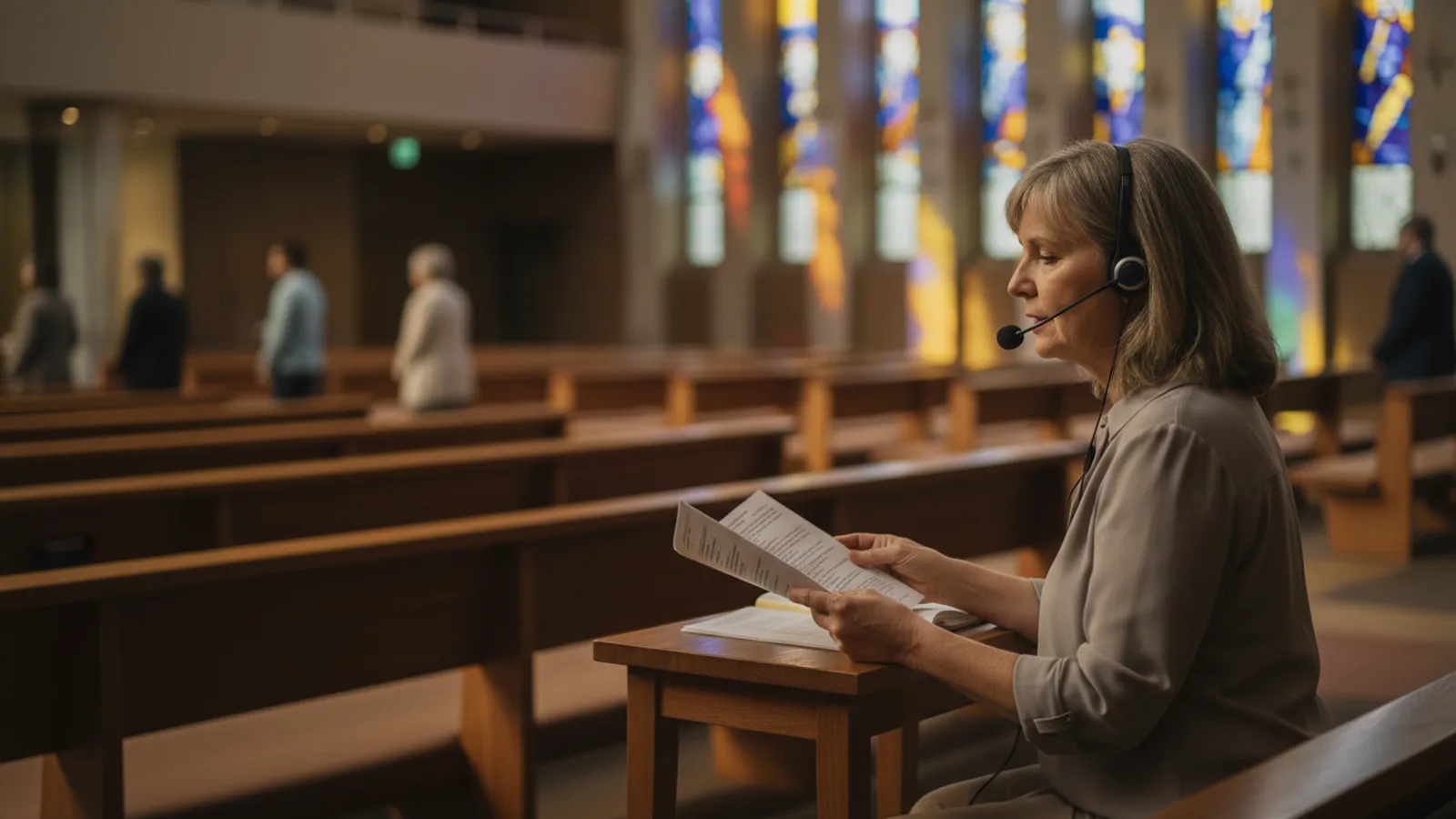
In most parishes and churches, interpretation starts with one person. A bilingual parishioner offers to help a few families follow the homily, a member of the Spanish choir whispers the readings to her neighbor, or the youth pastor interprets the sermon for visiting grandparents. It works, and then that person goes on vacation, gets sick or moves away, and the families who depended on them are lost again.
This guide is for pastors, parish staff and ministry leaders who rely on volunteer church interpreters: how to find them, how to train them, what makes church interpretation harder than it looks, and how to keep the ministry going when there are not enough volunteers.
What a church interpreter actually does
There are two ways to interpret a service, and volunteers usually do one without knowing its name.
- Consecutive interpretation. The speaker says a sentence or two and stops; the interpreter repeats it in the other language. It is easy to start and easy for the congregation to follow, but it doubles the length of whatever is interpreted. It suits a short welcome, a testimony or a small group.
- Simultaneous interpretation. The interpreter listens and speaks at the same time, a few words behind, into a microphone that reaches listeners' headsets or phones. The service keeps its normal length. It is much harder, and most volunteers need weeks of practice before they can keep up with a homily or a 40-minute sermon.
Most churches with a regular interpretation ministry end up with simultaneous interpretation for the homily or sermon, and consecutive for announcements and special moments.
Recruiting volunteers
Fluency in two languages is necessary, but it is not enough. When you ask for volunteers, look for people who:
- Understand the speaker's language easily, including fast speech, jokes and local expressions.
- Speak the listeners' language naturally, ideally as their first language. Listeners forgive a missed word; they tire quickly of stiff, foreign-sounding phrasing.
- Know the church's vocabulary in both languages. A parishioner who has prayed the Rosary in Spanish all their life already knows half of what a Catholic interpreter needs.
- Can commit to a regular rotation. Interpretation is a skill; someone who interprets once a quarter does not improve.
Ask in both language communities. The best interpreter is often a quiet member of the second-language Mass or service, not the most visible bilingual person in the parish.
Training: what to practice
Start with the fixed parts
Every service has parts that repeat: the greeting, the Creed, the Lord's Prayer, the responses, the blessing, the usual announcements. Give new interpreters these texts in both languages and let them start with those. In a Catholic parish, a volunteer who knows the order of the Mass in both languages is already a step ahead.
Learn the Bible the listeners read
When the priest or pastor reads a verse, the interpreter should not translate it on the spot. Listeners know their Bible, and a freshly improvised verse sounds wrong to them. The right habit is to read the verse from the Bible the listeners use. Here is John 14:27, the verse behind the sign of peace at Mass, in the World English Bible (Catholic edition):
Peace I leave with you. My peace I give to you; not as the world gives, I give to you. Don't let your heart be troubled, neither let it be fearful.
A Spanish Catholic listener should hear it as it reads in a Spanish Bible, for example the Santa Biblia libre para el mundo:
La paz os dejo. Mi paz os doy; no os la doy como la da el mundo. No se turbe vuestro corazón, ni tenga miedo.
A Vietnamese listener whose community reads the 1925 Vietnamese Bible should hear:
Ta để sự bình an lại cho các ngươi; ta ban sự bình an ta cho các ngươi; ta cho các ngươi sự bình an chẳng phải như thế gian cho.
Train volunteers to ask for the readings and the sermon's key verses before the service, and to keep the listeners' Bible open next to them.
Use the church's words, not the dictionary's
Catholics and Protestants use different words for the same things, and a volunteer who mixes them sounds like a visitor from another church. In Spanish, a Catholic congregation receives la Eucaristía while many Protestant congregations celebrate la Santa Cena. In Vietnamese, Catholics say Thiên Chúa for God and Gioan for John, while Protestants say Đức Chúa Trời and Giăng. Make a short list of these words for your tradition and give it to every new interpreter.
Pray the prayers the way the congregation prays them
When the congregation prays the Our Father, the interpreter should lead the prayer in the words the listeners know by heart, so they can pray along. A Spanish Catholic parish prays "perdona nuestras ofensas, como también nosotros perdonamos a los que nos ofenden"; many Spanish Protestant churches pray "perdónanos nuestras deudas, como también nosotros perdonamos a nuestros deudores". Both are correct. Only one is right for your congregation.
Translate by meaning
Homilies and sermons are full of expressions that make no sense word for word: "God has your back", "a mountaintop experience", "born again", "let's close in prayer". Teach volunteers to translate the meaning, keep sentences whole, and keep announcements and personal stories in plain everyday language. A good test: would a listener who only heard the interpretation think the preacher is a native speaker of their language?
Practice with recordings
The best training material is last month's homily or sermon. Volunteers can interpret a recording at home, record themselves, and listen back. Ten minutes a day for a few weeks does more than any workshop.
Support on Sunday
A few habits make a big difference:
- Send the material early. The readings, the sermon outline, any names of people and places, and the song list, at least a day before.
- Give them a quiet place and a good feed. An interpreter who cannot hear clearly cannot interpret. A line from the sound desk into headphones beats sitting in the pews.
- Rotate every 20 to 30 minutes when a service is long. Simultaneous interpretation is tiring, and quality drops after half an hour.
- Ask two listeners for feedback each month: one older member and one younger. They will tell you what the interpreter cannot hear about themselves.
- Thank them in public. Interpreters serve in the background, and the ministry depends on them wanting to come back.
When there are not enough volunteers
Most churches reach a point where the volunteers cannot cover everything: a third language community, a second Mass, a weekday funeral, a conference. That is where live AI interpretation helps, either alongside volunteers or in place of them on the Sundays nobody is available.
With Heartongue, a laptop at the sound desk takes the feed from the mixer. Each sentence is interpreted as it is spoken and reaches listeners' phones as captions and a natural AI voice, about two seconds after the speaker finishes it. Listeners scan a QR code, choose their language and put in their earphones. There is no app to install and no receivers to hand out, and it covers 49 languages.
It is built to do what you train your volunteers to do:
- Bible verses from the listener's own Bible. When the priest reads John 14:27, Spanish listeners read it from a Spanish Bible and Vietnamese listeners from the 1925 Vietnamese Bible, marked 📖 with the reference, as in the example above.
- Church words by tradition. A Catholic parish hears la Eucaristía and Thiên Chúa; a Protestant church hears la Santa Cena and Đức Chúa Trời, from a list of more than 1,000 church terms in every language.
- Prayers as the parish prays them. The Our Father, the Hail Mary, the Creeds and the Glory Be follow each congregation's wording.
- Natural phrasing. Expressions are translated by meaning and sentences are kept whole.
Be honest with your team about the limits. It is machine interpretation, so it can stumble on an unusual name or a noisy feed; your volunteers can fix names and terms in a glossary during the service. It includes only free, public-domain or openly licensed Bibles, so a Catholic parish will not hear the exact wording of its national Lectionary. And it does not replace the warmth of a person from the community. Many churches use it for the homily or sermon and keep their volunteers for the welcome, the testimonies and the conversations after the service.
Try it at a real service
Heartongue gives every new church 2 free language-hours to try it, with no card. After that, the Chapel plan is $49 a month for 15 language-hours, and the Parish plan at $149 a month covers every regular service in every language. See how a church translation system without receivers works, or read how parishes plan a bilingual Mass.
More from the blog
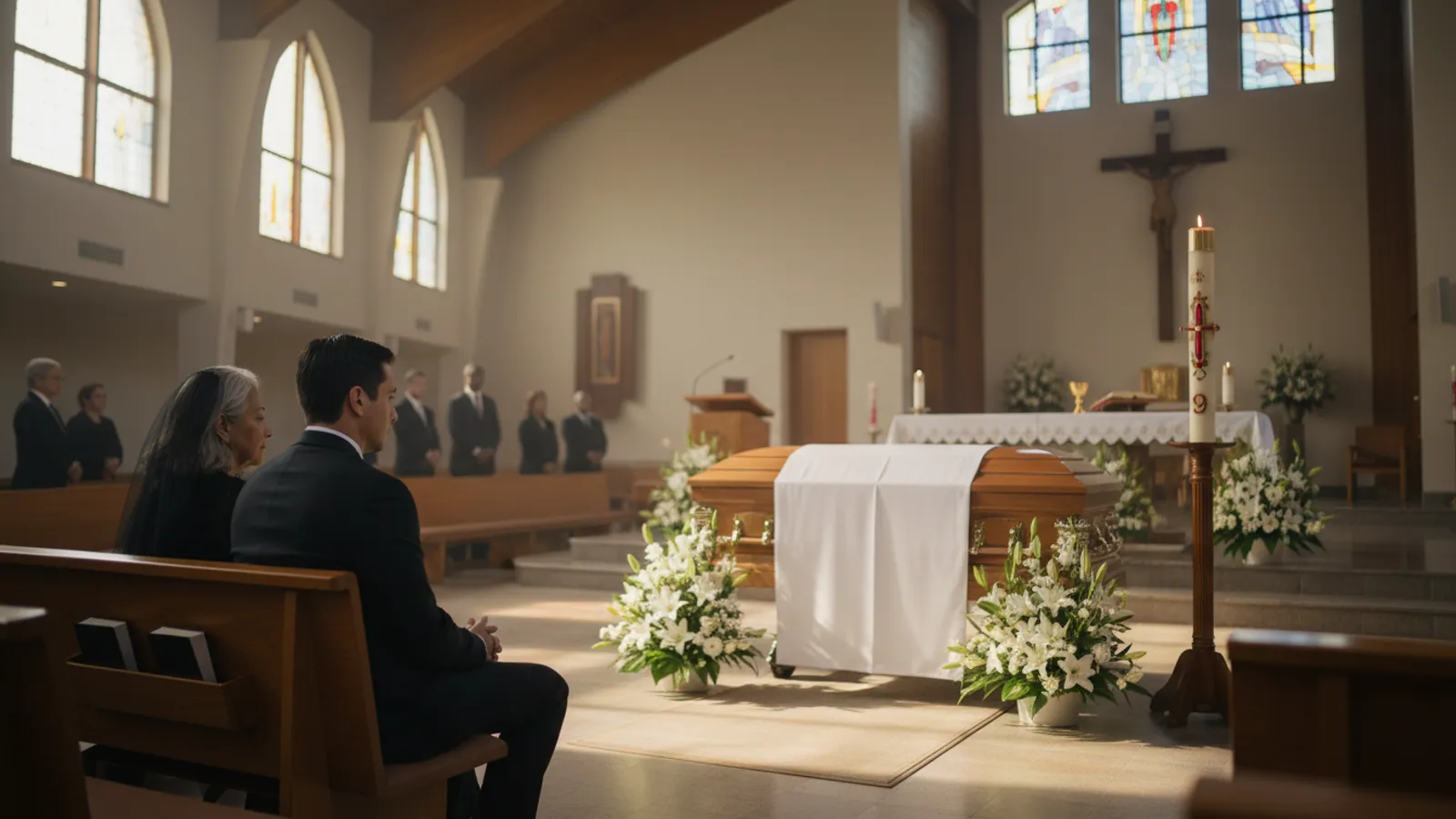
Funeral Mass in Spanish: Planning for a Bilingual Family
Heartongue8 min read
How a parish plans a funeral Mass in Spanish or for Spanish- and English-speaking relatives: readings, homily, words of remembrance, interpretation.
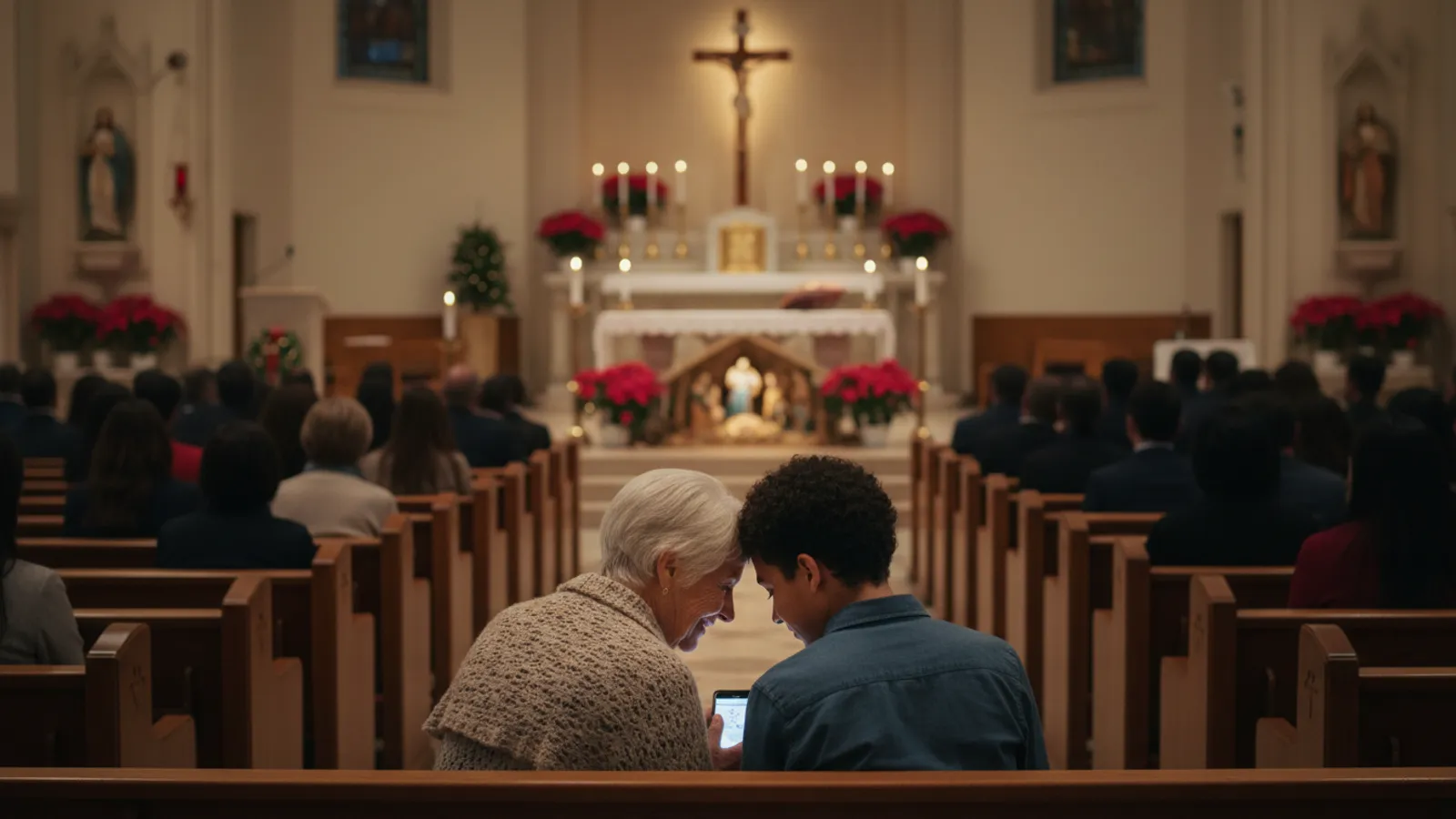
Midnight Mass in Spanish: Planning a Bilingual Christmas Eve
Heartongue8 min read
How a parish plans Midnight Mass in Spanish, or one Christmas Mass for Spanish- and English-speaking families: readings, music, homily, interpretation.
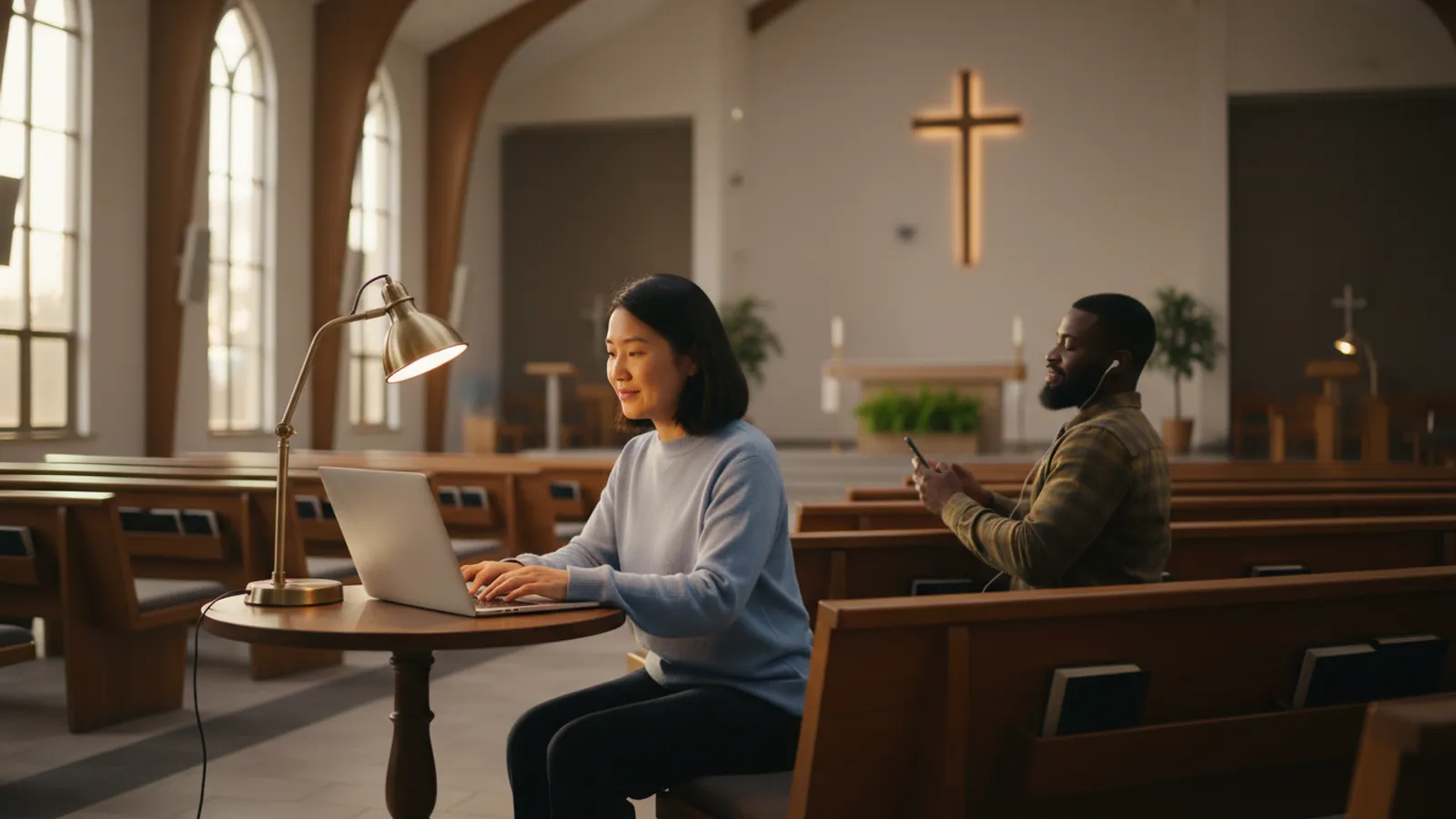
Church Translation App: How to Test One Before Sunday
Heartongue7 min read
A church translation app can sound fine in a demo and fail at Mass. Five tests for a weeknight: a Bible verse, a prayer, church words, an idiom, announcements.
Try it at your next service
2 language-hours free, no card needed. Set up a room in five minutes.
 Product Hunt
 Indie Hackers
 Fazier
 StartupBase