
AI Translation for Churches: What It Gets Right and Wrong
Is AI translation good enough for Mass or a Sunday service? Where it helps, where generic tools fail with Scripture and prayers, where people still matter.
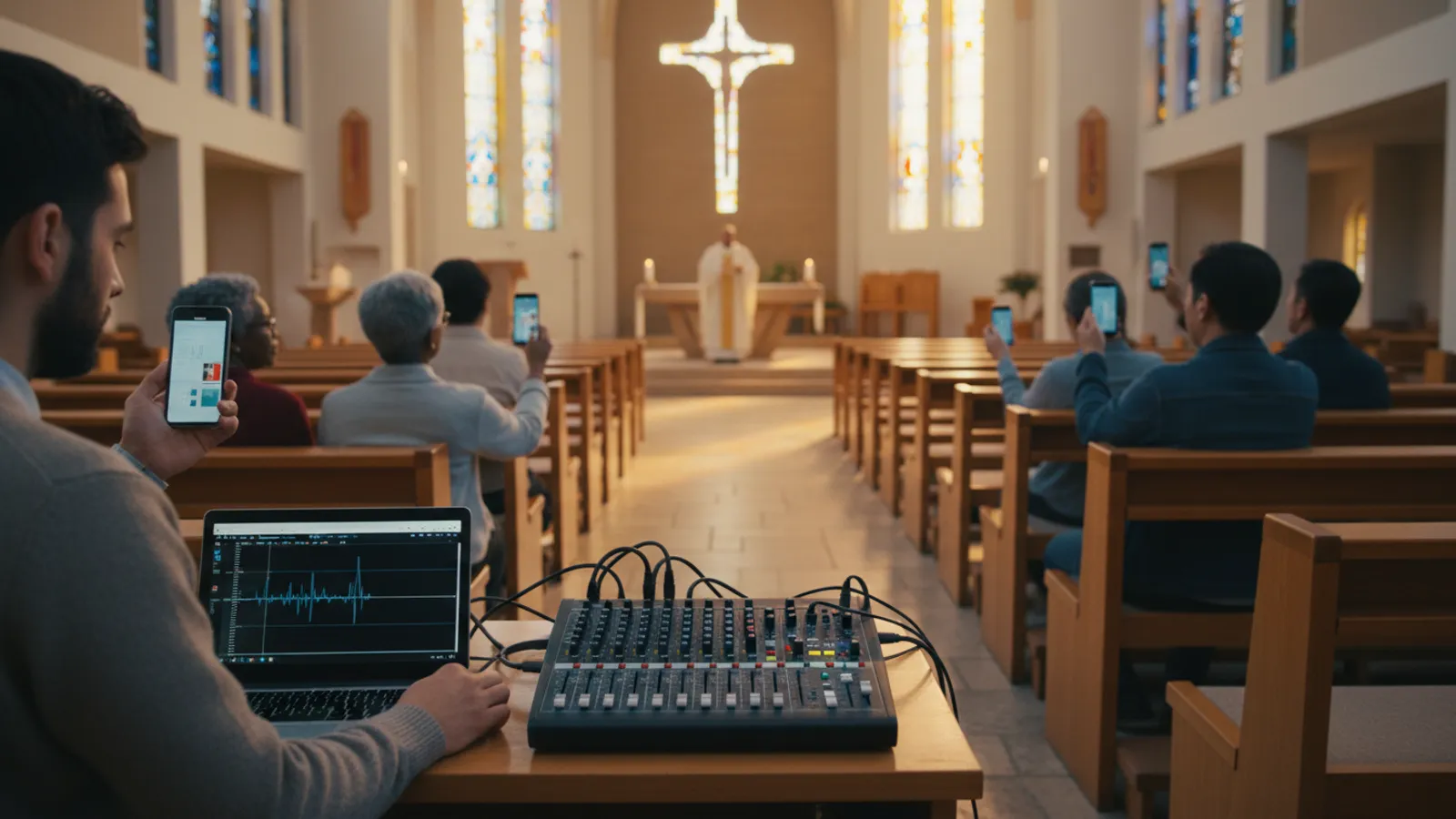
Sooner or later someone on the parish council asks it: "Couldn't we just use AI for the Spanish speakers?" Someone else has a cousin whose church tried a translation app and gave up after three Sundays. Both are right about something.
AI translation can now follow a whole sermon in real time and put it on every listener's phone in their language. It can also turn a well-known verse into wording no Bible has ever used, mix Catholic and Protestant vocabulary in one sentence, and render "born again" as if it were about a hospital. Whether it works in your church depends less on "AI" than on what the tool was built for.
This guide is for pastors, parish staff and sound teams weighing AI translation for churches: what it does well, where generic tools fall short, and how to tell the difference before anyone in the pews depends on it.
What "AI translation" means in a church
Three quite different things get called AI translation:
- Phone translation apps. One person speaks, the phone translates for the person in front of them. Good for a conversation at the door, not for a congregation.
- Live captions. The sermon is transcribed and the text is machine-translated on a screen. Helpful, but everyone reads the same screen in one or two languages.
- Live AI interpretation. The audio from the sound system is translated sentence by sentence, and each listener follows on their own phone, with captions and a voice, in the language they choose. This is what a church interpreter in a booth does, without the booth.
For a Mass or a Sunday service with several language communities, only the third one does the whole job. The rest of this guide is about it.
What AI translation does well
It is there every week. A volunteer interpreter gets sick, moves away or wants to sit with their family. Software does not need a rota, and it can serve the 8:00 Mass as well as the 11:30.
It covers many languages at once. A human team for Spanish, Vietnamese and Tagalog is three people every Sunday. Live AI interpretation can serve each listener in their own language from one broadcast. Heartongue supports 49.
It keeps up. Good tools speak each translated sentence about two seconds after the speaker finishes it. Listeners hear the homily while the priest is still preaching it, not a summary afterwards.
It handles ordinary speech. Announcements, a story about the parish picnic, a thank-you to the choir: everyday sentences are what general AI models translate best.
Where generic AI translation goes wrong in church
General translation tools are built for meetings, travel and customer service. Church language breaks them in four predictable places.
Scripture. When the lector reads a verse, a generic tool translates the English sentence fresh. The listener gets new wording that matches no Bible they know, in the one place where people know the words by heart.
Church words. The same word differs by tradition. Catholic and Protestant Vietnamese speakers say "Thiên Chúa" and "Đức Chúa Trời" for God; Korean Catholics say 하느님, Korean Protestants 하나님. A Spanish-speaking Catholic hears la Eucaristía, an evangelical la Santa Cena. Generic tools pick whichever word their training data saw most, so a parish can hear Protestant words at Mass, or both mixed in one homily.
Prayers. When the congregation prays the Our Father or the Hail Mary, everyone knows one exact wording. A fresh machine translation of a prayer is close, and close is jarring.
Idioms and whole thoughts. Preachers talk in images: "born again", "a mountaintop experience", "the closing song". Word-for-word tools translate the words and lose the meaning, and many break a long sentence in the middle, so the second half arrives without the first.
None of this makes AI useless. It means the tool has to know it is in church.
What it looks like when the tool knows it is in church
Here is one verse, Matthew 11:28, as a homily might quote it, and as listeners should see it: from a Bible in their own language and tradition, not a fresh translation.
English (World English Bible, Catholic edition): "Come to me, all you who labor and are heavily burdened, and I will give you rest."
Spanish, for a Catholic parish (Santa Biblia libre para el mundo): "Venid a mí todos los que estáis fatigados y agobiados, y yo os haré descansar."
Spanish, for an evangelical church (Reina-Valera 1909): "Venid á mí todos los que estáis trabajados y cargados, que yo os haré descansar."
Vietnamese (Kinh Thánh 1925): "Hỡi những kẻ mệt mỏi và gánh nặng, hãy đến cùng ta, ta sẽ cho các ngươi được yên nghỉ."
The two Spanish lines are both correct; each is the wording its own community reads. That is the standard to hold any AI tool to.
This is how Heartongue works. When a verse is recognized, each listener reads it from a Bible of their language and tradition, marked 📖 with the reference. Catholic listeners get Catholic words and Protestant listeners Protestant ones, from more than 1,000 church terms in every language. The Our Father, the Hail Mary, the Creeds and the Glory Be follow the wording each congregation prays. Sermon expressions are translated by meaning, sentences are kept whole, and the announcements stay plain speech.
One honest limit: Heartongue ships 37 free, public-domain or openly licensed Bibles. Licensed editions such as the NIV, the ESV or the Lectionary translations used at Mass are not included, so a quoted verse can read slightly differently from the book in the lector's hands.
Where people still matter
AI interpretation is not perfect, and a church should plan for that rather than hope.
- Names and local words. A new priest's surname, the parish hall, the town's patron saint: add them to the church glossary beforehand. Your team can correct a term during the service too.
- Sound. Most "bad translation" is bad audio. Feed the tool from the mixer, ask speakers to stay close to the microphone, and pause between sentences.
- Someone listening. Ask one bilingual parishioner per language to follow on their phone for the first few weeks and tell you what sounds wrong.
- Pastoral and private moments. Confession, counseling, marriage preparation and anything legal or medical need a qualified human interpreter. AI interpretation is for the service, not for those conversations.
Many churches end up with both: AI interpretation for every Mass and service, and their best bilingual volunteers freed for welcome, catechesis and pastoral care.
Questions to ask before you choose
- Does it read verses from real Bibles, or translate them fresh? Read a familiar verse aloud and ask a native speaker.
- Does it know your tradition? Ask a Catholic listener and a Protestant listener what they heard for "God", "Communion" and "Saint Paul".
- Does it pray the prayers as your people pray them? Pray the Our Father together during the test.
- Do listeners need anything? Headsets, an app, an account? Each step loses people at the door.
- How is it charged? By the hour, by the language, by the listener? Make sure a quiet Sunday does not cost as much as Easter.
For a step-by-step weeknight test, see our guide to testing a church translation app before Sunday.
Trying Heartongue
Heartongue is live AI interpretation made for Catholic parishes and multilingual churches. A laptop at the sound desk takes the audio, listeners scan a QR code and choose their language, and each one follows on their own phone with captions and a natural AI voice. Nothing to install and no receivers to hand out. See how it fits your setup on the church translation system page.
Every church starts with 2 free language-hours, enough to test it at a real service. After that it is $4 per language-hour, the Chapel plan at $49 a month with 15 hours, or the Parish plan at $149 a month for every regular service in every language your people need. The details are on the pricing page.
AI translation is ready for church when it speaks the way your church speaks. Test that first, and let the rest follow.
More from the blog
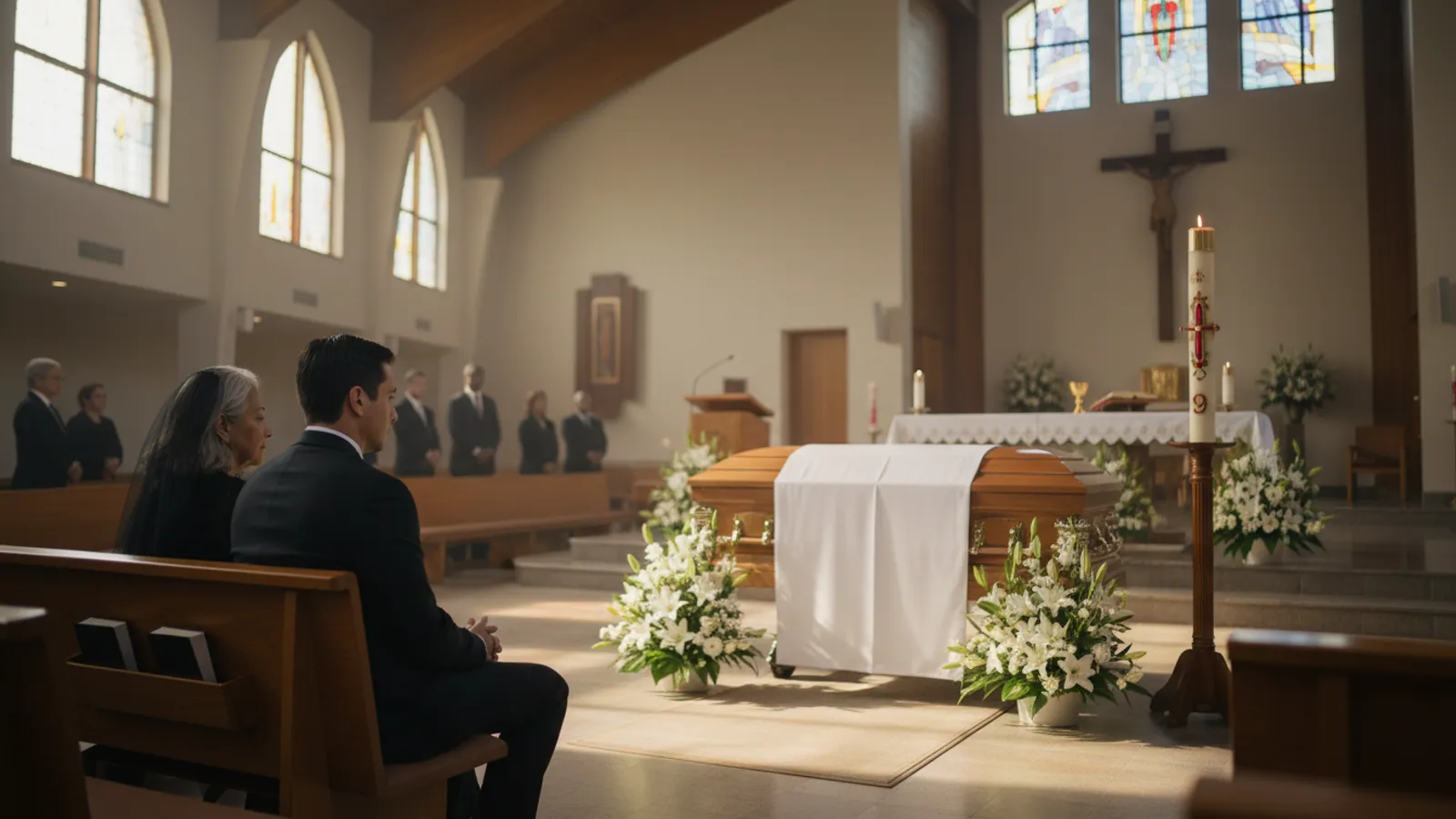
Funeral Mass in Spanish: Planning for a Bilingual Family
Heartongue8 min read
How a parish plans a funeral Mass in Spanish or for Spanish- and English-speaking relatives: readings, homily, words of remembrance, interpretation.
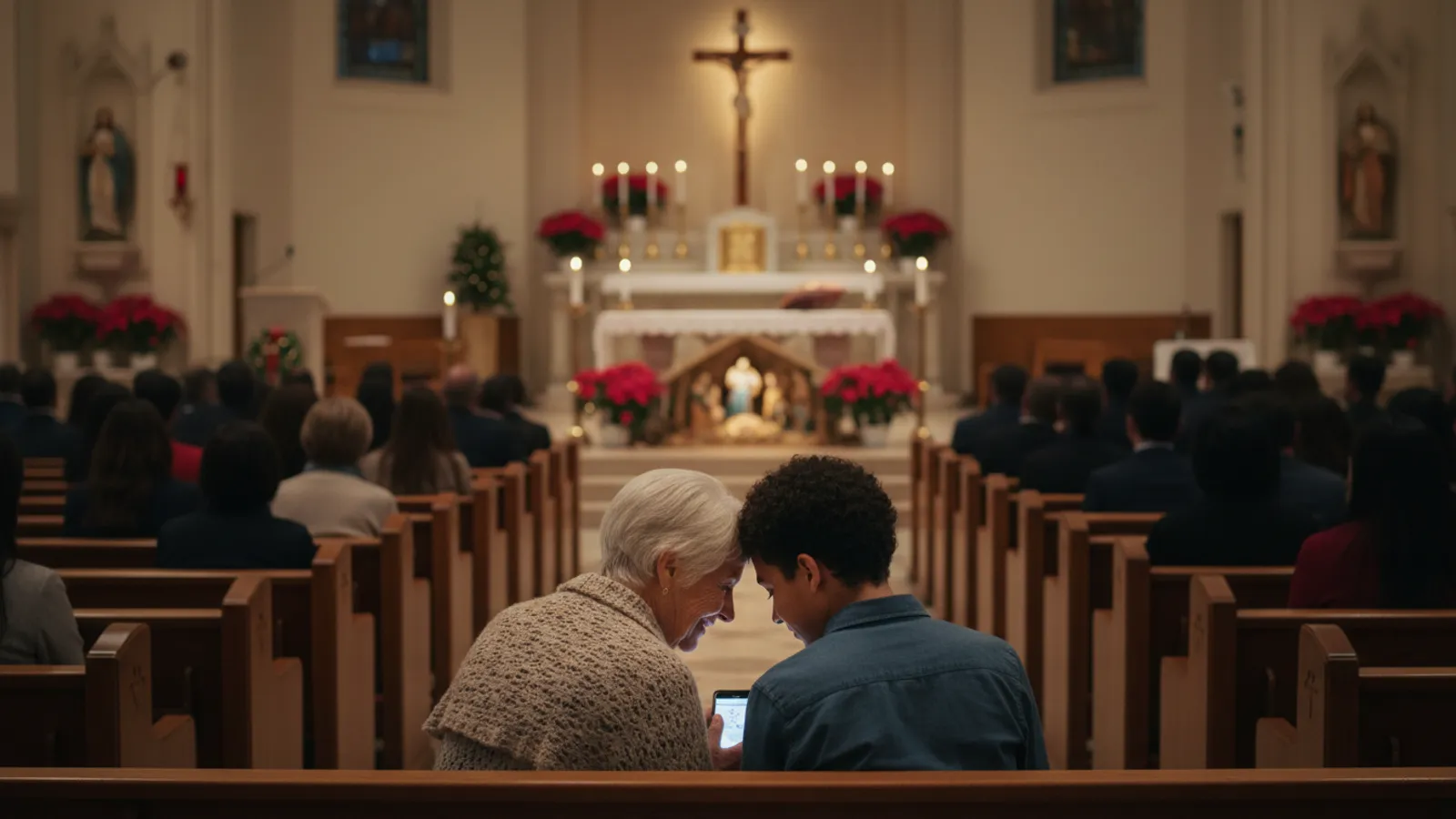
Midnight Mass in Spanish: Planning a Bilingual Christmas Eve
Heartongue8 min read
How a parish plans Midnight Mass in Spanish, or one Christmas Mass for Spanish- and English-speaking families: readings, music, homily, interpretation.

Church Translation App: How to Test One Before Sunday
Heartongue7 min read
A church translation app can sound fine in a demo and fail at Mass. Five tests for a weeknight: a Bible verse, a prayer, church words, an idiom, announcements.
Try it at your next service
2 language-hours free, no card needed. Set up a room in five minutes.
 Product Hunt
 Indie Hackers
 Fazier
 StartupBase